For a first page-based manga storyboard, arrange the story beats in small page thumbnails, rough in the panels and dialogue, then test the reading order before drawing finished art. Ask someone to read the pages without your explanation and revise what they misunderstand. A vertical-scroll comic needs a plan built for scrolling, not page turns.
What a manga storyboard needs to show
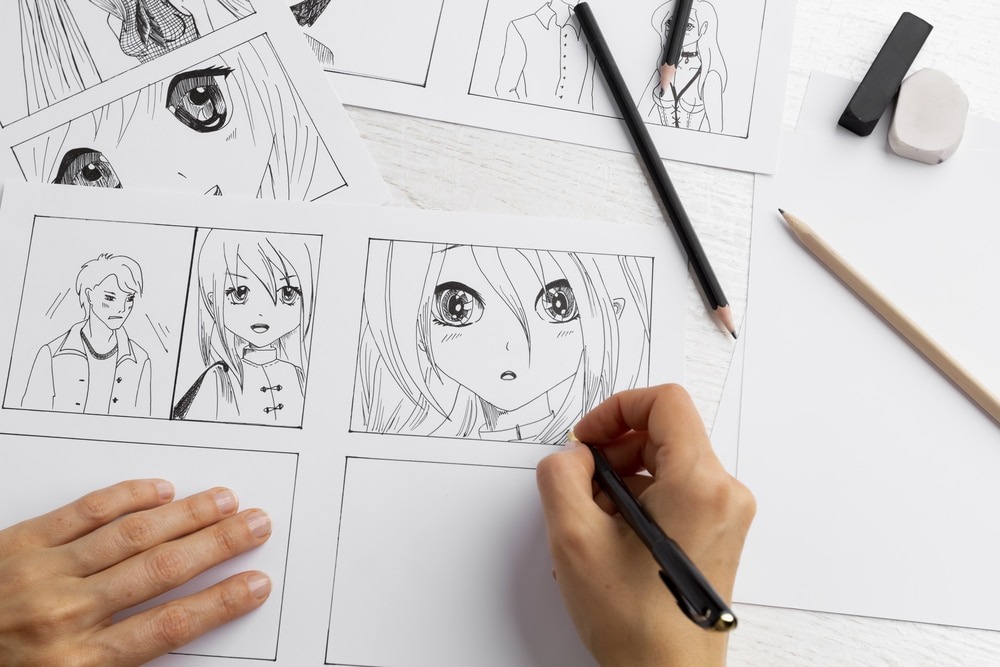
A manga storyboard, often called a name or nemu, is a rough draft of your pages. It fixes the panel order, character movement, dialogue and key expressions before you draw anything final. VIZ Media's manga-creation guide describes revising at this stage. A script tells events in words, thumbnails place the major beats, and the page storyboard makes those beats easy to see. Stick figures and rough speech balloons are enough. Add detail only for complicated action or when a collaborator needs it. For each panel, mark who is present, what changes, who speaks and where the reader should look.
Start from a script or from pictures?
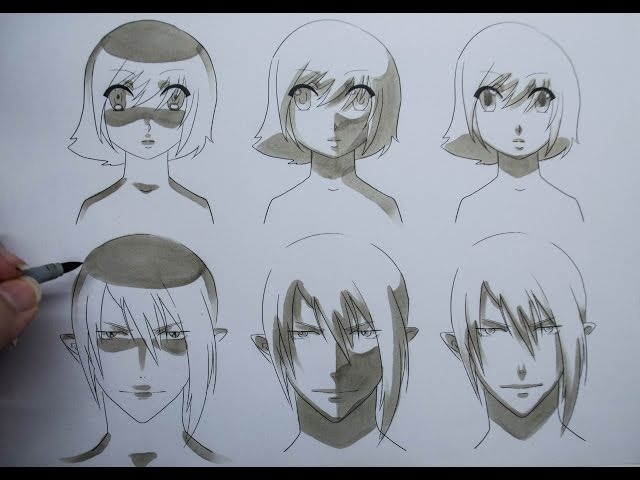
Start with the material you understand best. A scene built on a confession often depends on the exact words. A scene built on a discovery is easier to find through sketches.
| Method | Start here when | Risk | Keep |
|---|---|---|---|
| Script-first | Dialogue, motivation or scene logic is clear | One speech occupies too many similar panels | Key lines tied to visible changes |
| Visual-first | Action, discovery or physical movement is clear | The images lose the reason events matter | The action sequence plus needed context |
| Hybrid | Words and images both need testing | A long script and an overbuilt visual plan pile up together | A brief beat statement, must-keep lines and loose images |
In a made-up workshop scene, Ari opens a drawer and finds that a treasured sketchbook is missing. Eli has moved it to a dry shelf because a pipe near the drawer is leaking, and left a folded note explaining why. Ari doesn't know this and assumes Eli took the book without permission.
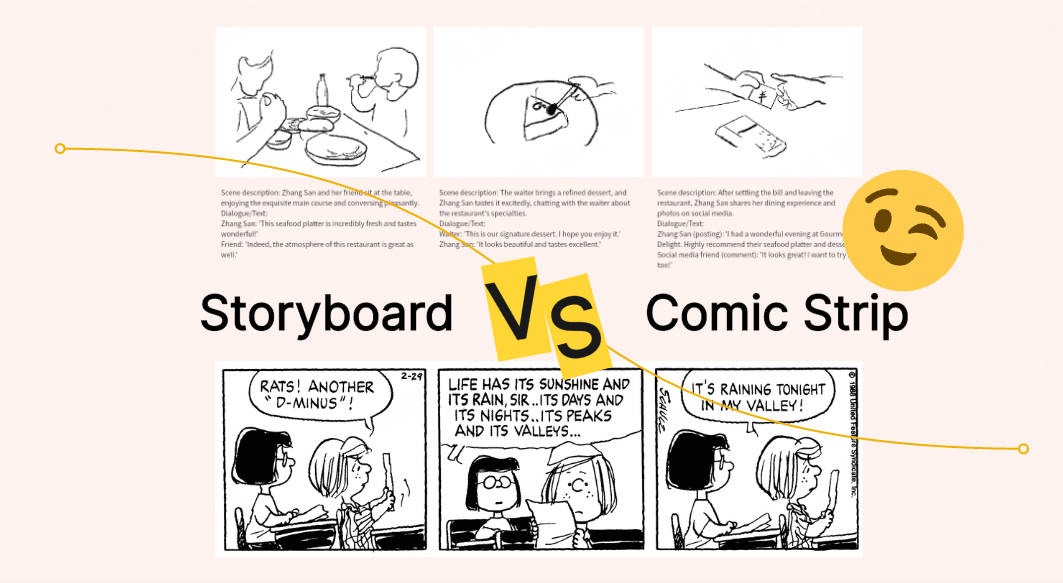
A complete script can spend a page on why Ari values the sketchbook before anyone touches the drawer. A purely visual draft can show the empty compartment and Ari's alarm without making the accusation understandable. The scene needs only this: Ari expects the book, finds it gone, suspects Eli and later learns what happened.
Write one sentence describing the key change in your scene. If it's a physical event, start with images. If it depends on something spoken or understood, start with the words. Expect to revise both once you bring them together.
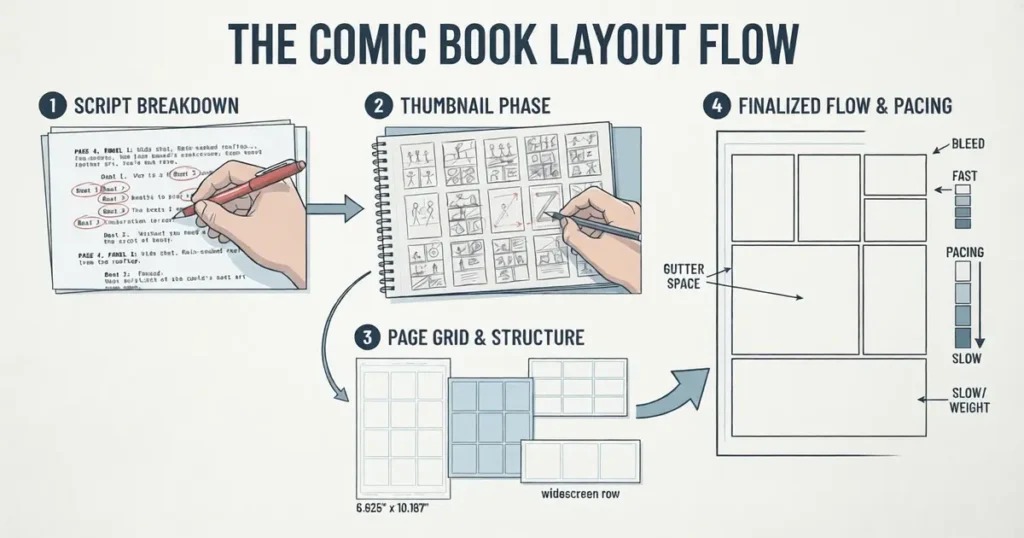
Find the story beats and map the chapter in thumbnails
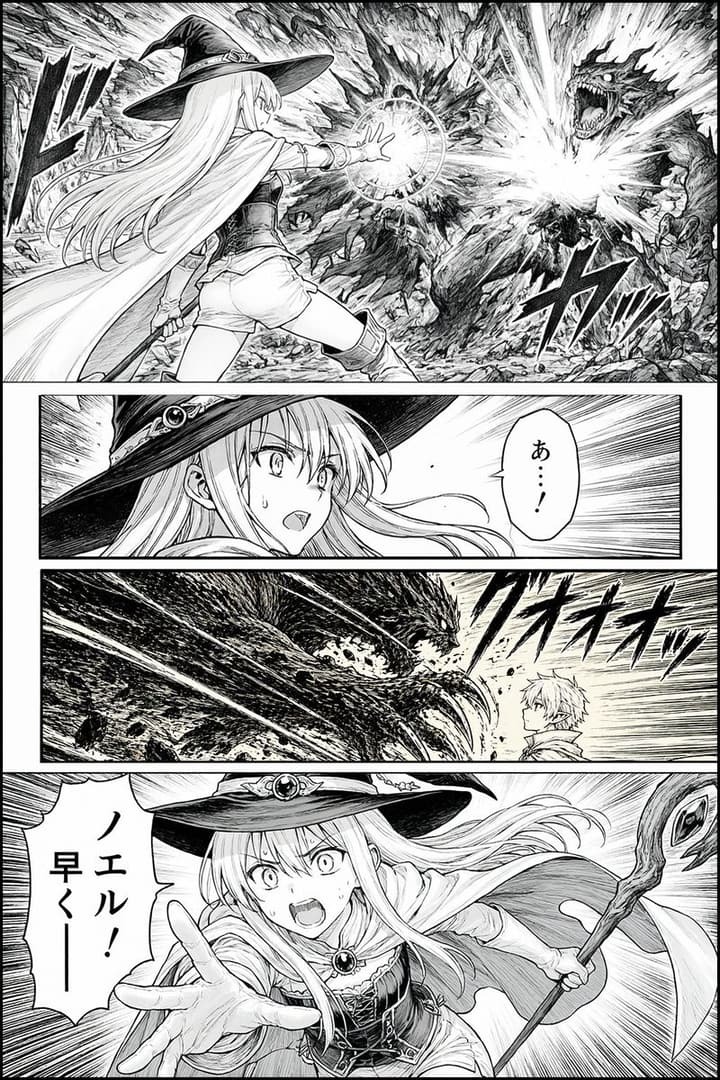
A story beat is a change the reader needs to take in. A character finds an object missing, notices someone enter, makes an accusation or realizes an earlier assumption was wrong.
Draw small rectangles to stand for the pages in sequence. MediBang's tutorial on making a manga name describes miniature planning as a way to see the wider chapter before you enlarge individual drawings.
| Beat | What changes for the reader | Page | Purpose |
|---|---|---|---|
| Ari goes to the drawer | The workshop, drawer and expectation are established | A | Orientation |
| The drawer is empty | The sketchbook is missing | A | Discovery |
| Eli approaches; a folded note sits beside the drawer | Another person and a clue appear, though Ari overlooks the paper | A | Suspicion |
| Ari confronts Eli; Eli points to the note | Ari's accusation meets new information | B | Dialogue and redirection |
| Ari reads the note and sees the leak | Eli's reason becomes clear; Ari reacts | C | Explanation |
If page B repeats Ari's surprise in several panels while page C squeezes the note, the leak and the emotional reversal into one crowded image, cut a repeated expression and the reveal gets more room. Merging two minor movements frees space too, and no key action is lost.
Turn thumbnails into rough manga panels
Enlarge one thumbnail page and give each panel a visible job: set the place, show an action, isolate a clue or show a reaction. Rough rectangles and figures are enough while the order is still changing.
First pass: three pictures, missing context
- An isolated close-up shows a folded piece of paper.
- A blank rectangle suggests an empty container, but no part of the room identifies it.
- Ari looks worried, and the viewer can't place Ari, the drawer and the paper together.
All three pieces of information are there, but the reader can't tell how they sit in the room. It also looks as if Ari has already seen the paper, which spoils the later exchange with Eli.
Revised pass: four panels with a readable cause
- Location: a wide view places Ari beside the workshop drawer, with a shelf and a door visible.
- Action: Ari pulls open the drawer and looks inside.
- Discovery: a closer view shows the empty compartment. A folded note is tucked beside its outer edge. It's in the scene, but Ari isn't looking at it.
- Reaction: Ari stares at the space where the sketchbook was as Eli approaches the doorway.
The revision gives the close-up a location and lets Ari misjudge why Eli moved the book. A few marks establish the drawer, Ari's position and the clue. You don't need polished anatomy or detailed furniture to follow this sequence.
In the rough-page pass, label the new information each panel delivers. Merge two adjacent images that do the same job. A change of viewpoint earns its place by giving the reader something new.
Give dialogue scenes visible movement and reactions
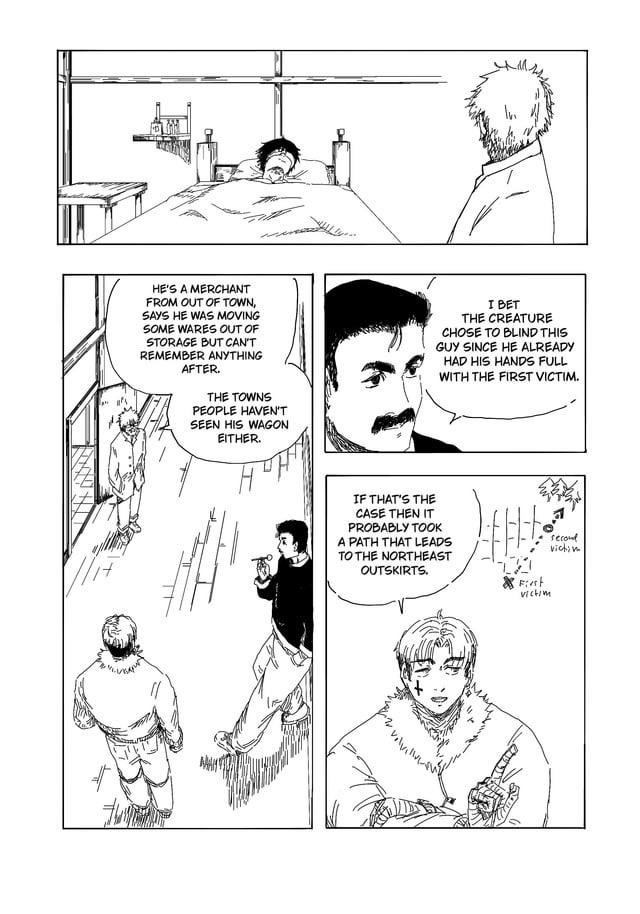
Dialogue scenes need visible changes in thought or behavior, even when the characters stay in one room. Use the drawings to show who is listening, what someone notices or why a pause matters.
A creator on r/MangakaStudio described a dialogue-heavy chapter like this: “I had trouble in coming up with panels since it’s mostly just talking and 0 action.”
In the workshop, a first draft alternates Ari's face and Eli's face as they argue about the missing book. The exchange moves forward only when Eli notices the folded note by the drawer and points to it. Ari follows the gesture. That action changes what both Ari and the reader are thinking about, even before the message is readable.
| Shot | What it adds |
|---|---|
| Both characters and the open drawer | Places the disagreement in the room |
| Ari speaking toward Eli | Makes the accusation clear |
| Eli looking toward the drawer | Redirects attention to the overlooked note |
| Eli pointing; Ari turning | Connects the clue to the reply |
| Ari hesitating before opening the note | Shows the shift in confidence |
A still exchange works when silence or repeated framing carries the emotion. Here the shot changes mark the point where accusation gives way to discovery.
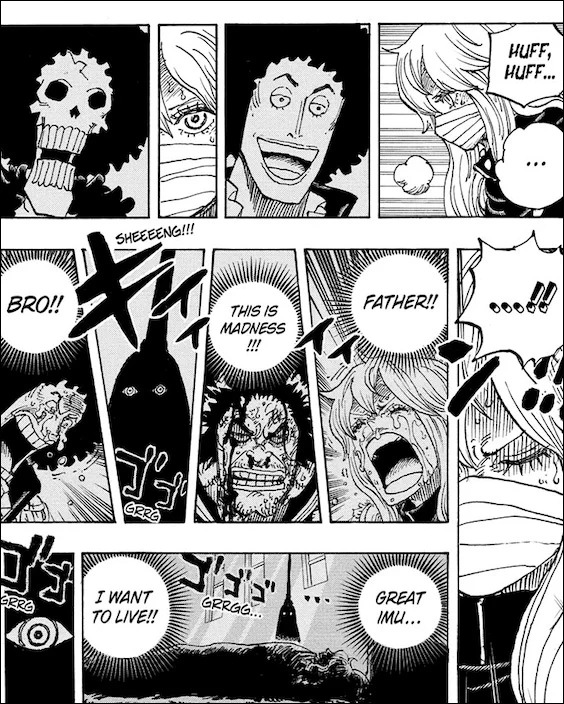
Fit dialogue balloons to the reading path
Reserve space for dialogue while the page is rough. The reader should meet the question before the reply and know who speaks each line.
A creator posting a first storyboard in r/Mangamakers wrote, “I haven't added the text bubbles just to see whether my art makes sense without them.” A sequence can show a character's movement clearly while its speaking order is still open.
On a Japanese-style right-to-left page, keep the panel route and the speech turns running right to left throughout. An English-language original designed for left-to-right reading should run left to right from start to finish.
- Ari: “Where's my sketchbook?”
- Eli: “Read the note.”
- Ari: silently turns toward the folded paper.
A balloon placed too early in the route makes Eli seem to answer before Ari asks. A balloon drawn over the paper hides the object that explains Eli's gesture.
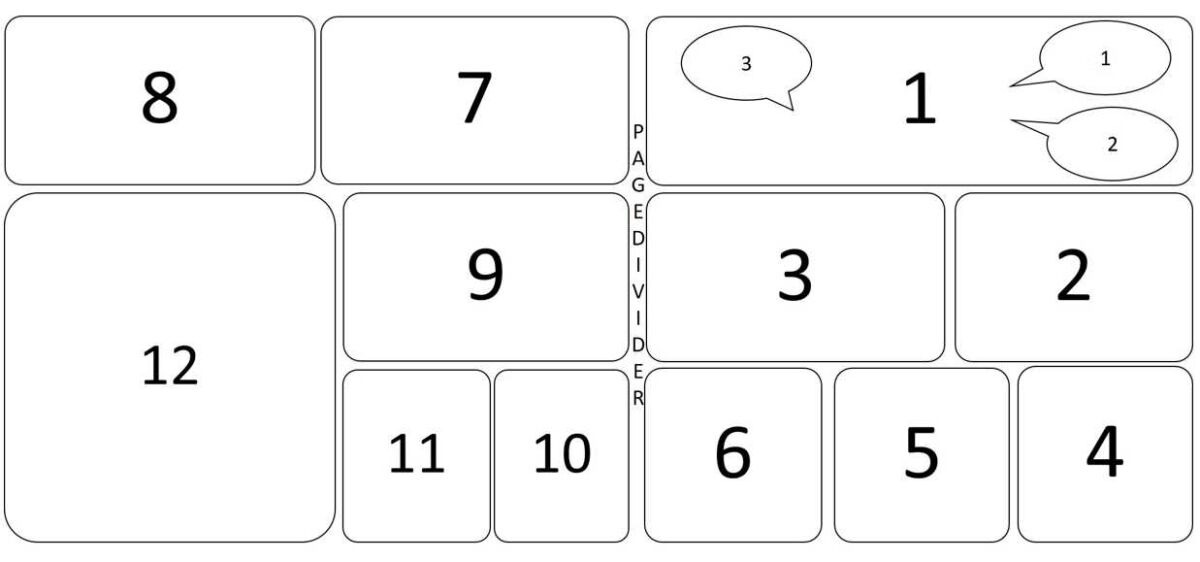
Trace the panel order and the balloon order as two separate paths, and number them if needed. Look at the first speaker and the visible clue on their own. When a tiny thumbnail is too small for full lettering, key a script to each panel and speaker to keep the dialogue. VIZ describes that kind of thumbnail-and-script workflow.
Pacing, spreads and page turns

Page placement decides when the reader can see a clue and when its meaning becomes clear. A folded note can appear before the characters read it, but its words must stay hidden until the story is ready to reveal them.
In the workshop example, page B contains Eli pointing to the note. Page C shows Ari unfolding it and reading: “Moved your sketchbook to the dry shelf. The pipe by the drawer is leaking.” A glance at the wet floor confirms the explanation, and Ari's accusing look gives way to relief.
If the readable message sits on the page facing Eli's gesture, a print reader sees the explanation before the moment meant to reveal it. Move the unfolded message past the page turn and leave the folded note where it is.
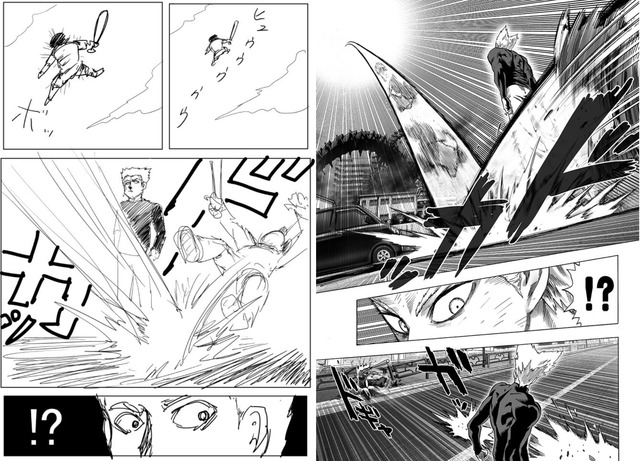
A contributor to r/MangakaStudio described a printed overview: “I have pages printed out with a bunch of boxes grouped like this so I can just do thumbnail sketches.” Putting the pages together also shows whether long stretches repeat the same kind of beat.
As a reference for reveal placement, CLIP STUDIO's documented eight-page shojo example puts a pivotal climax on page six of that story.
Facing printed pages, single-page digital displays and vertical scrolling expose information differently. Review a page-based sequence the way the reader will meet it.
View the assembled pages in the format readers will use, and mark where each decisive fact becomes readable. Shift a beat or its surrounding space when the timing spoils the effect. A quiet scene carries its meaning without a dramatic page turn.
Have someone read the storyboard, then revise
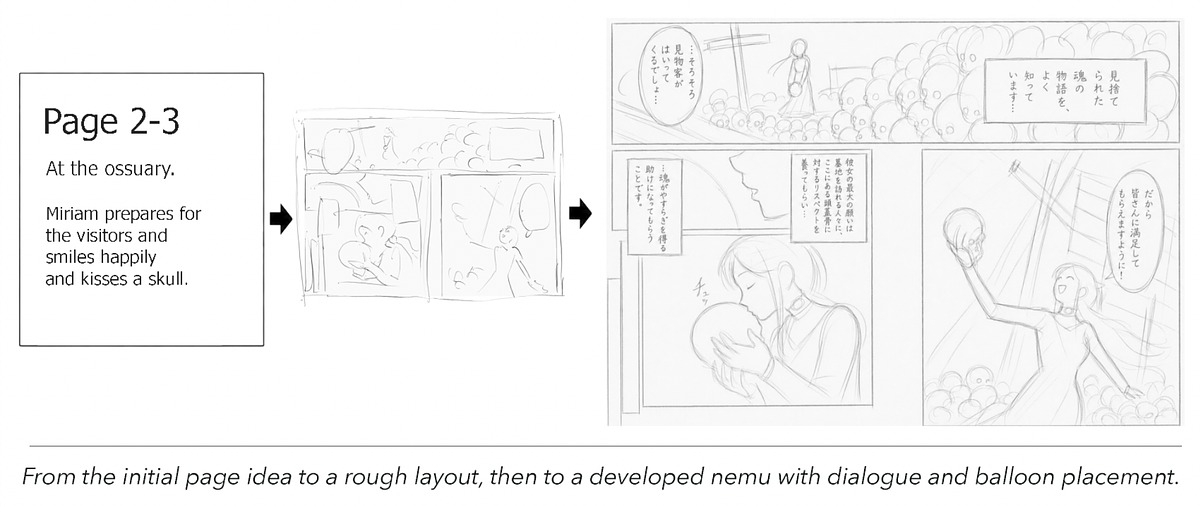
A storyboard is ready for feedback when someone unfamiliar with the scene can follow the main action without the artist explaining every panel. This is the moment to catch a mistaken inference while the drawings are still easy to move.
Hand the rough pages to a reader in reading order. Ask them to retell the action, name the speaker at the important moments and point to the first panel that seemed ambiguous. If you're working alone, set the pages aside, then reread them without your private notes.
If a reader takes the isolated note close-up to mean Ari already read it, the first pass gave the clue away too early. The establishing view and the folded note's position in the revised pass fix the location and keep the later explanation intact.
| Misreading | Cause | Fix |
|---|---|---|
| The scene seems to move to another room | No recognizable spatial cue | Restore the doorway, drawer or room relationship |
| Eli seems to speak first | Balloon route conflicts with dialogue order | Move the relevant balloon along the planned path |
| Ari seems to have read the note early | Paper's contents or Ari's gaze gave it away too soon | Keep the message folded and redirect Ari's attention |
| The note's meaning is already known | Reveal is visible across the spread | Change when its text becomes readable |
| Ari's relief has no cause | Missing explanation or reaction | Link the dry shelf, leak and Ari's change of belief |
A story can also withhold a motive on purpose. Ari's belief that Eli took the sketchbook can stay unresolved for a page while the reader still knows where Ari is and what happened to the drawer.
Record each misreading beside its panel, fix the smallest beat, viewpoint, line or balloon that causes it, and repeat the reading pass. The main action and the panel order should be clear.
What the research says about reading paths
In Neil Cohn's 2013 comic-layout study, participants numbered the reading paths they intended through arrangements of empty panels. The layout influenced the routes they chose, and the routes sometimes departed from a simple Z-shaped path.
Research by Foulsham and Cohn examined comic strips in three layouts across two experiments, using reading times and eye movements, including returns to earlier panels. Both studies used experimental tasks, so they set no single layout rule for manga.
Paper or digital: keep the storyboard editable
Paper and digital storyboards both work. Choose the method that lets you revise the sequence and pass its meaning to the next person involved.
On paper, draw small boxes on loose sheets, a notebook or folded pages, and rearrange them while the order is still changing. Digital drawing pages or movable cards serve the same purpose.
For a solo project, a notebook is enough. A writer and artist working separately need labels that identify page order, speakers and any dialogue stored in a companion script.
Save or label the version that passed the reader check, including its reading direction and dialogue references.