Plan just enough to draw your protagonist's next choice as a sequence of panels. For a solo beginner, a short outline plus rough thumbnails is enough. If you're handing the work to another artist or meeting a publisher's requirements, use the fuller script or the package they specify. Next, thumbnail one scene and see whether a new reader can follow it.
You may already know your characters, the world they live in, and the scene you can't wait to draw. The hard part is deciding what the story needs before those ideas become pages.
Choose a way to plan from what you already have

An outline, a script, and a rough storyboard each answer a different kind of question.
A creator in r/Mangamakers asked, “Do I write the story first? Or do I draw as I'm writing?” Either order works. The choice depends on what's missing: story logic, visual information, or something another person needs to understand.
| What you have | What's unclear | How to plan | What you end up with |
|---|---|---|---|
| Several scenes or plot ideas | How events connect | Loose outline or movable scene cards | Ordered story beats |
| One strong visual moment | What happens before and after it | Rough thumbnails with brief notes | An action sequence you can see |
| A developed plot | How an artist should interpret the scene | Written scene or page script | Action and dialogue directions |
| Characters and extensive worldbuilding | What anyone does next | Character-focused premise | Goal, pressure, and choice |
| A story you can partly picture | Both continuity and visual pacing | Brief beats followed by rough pages | A small hybrid plan |
Manga artist Naoko Hara, writing for MediBang Paint, describes different starting methods, including working from prose or beginning with drawings.
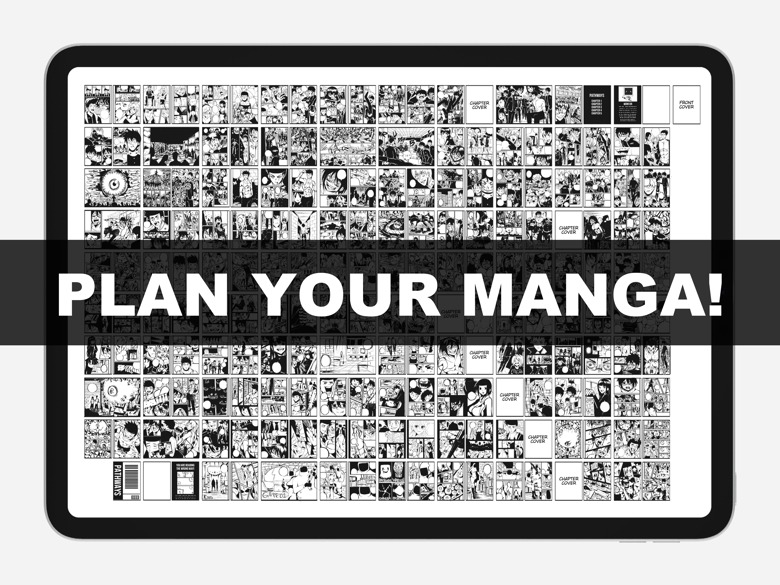
You don't have to write a full manuscript or draw a polished storyboard first. A rough sketch can expose a missing action, while a few lines of text keep an exciting sequence connected to the rest of the story.
The hybrid route works when neither format alone gives you enough. Record a few events, sketch their order, and add dialogue notes where a character's intention is unclear.
Give the story a character who has something to decide
Worldbuilding gives a story its surroundings. A character's desire and the pressure on it give those surroundings a reason to matter.
Here's an original example. Mina, a shy student, has borrowed a classmate's umbrella and wants to return it without an awkward conversation. Heavy rain begins, and she sees that classmate, Ren, waiting outside without shelter. She could hand over the umbrella right away, but that means approaching someone she has been avoiding.
“A rainy school campus” is a setting. “A student must decide whether to approach an avoided classmate who needs the umbrella” is a situation you can put on a page.
The stakes are private: embarrassment, concern for Ren, and the chance that their relationship changes.
VIZ Media's Manga Creation 101 places character development and the character's journey early in its illustrative manga-production process. In MediBang's short-manga tutorial, Naoko Hara recommends picking the scene you most want to draw and building the short story around it.
For your own story, write one sentence that holds your protagonist's immediate goal, the pressure that complicates it, and the decision they face. Mina's version: A student who wants to return an umbrella quietly must decide whether to approach its owner when sudden rain leaves the owner without shelter.
For character development and the wider plot, see the manga story outline guide.
Connect scenes by cause and consequence
Memorable moments fall into order once the result of one event changes what happens next. Scene cards let you rearrange events and check whether their relationships still make sense. Too Corporation's How To Draw Manga guidance describes several ways to organize a plot, including outlines and rearrangeable scene notes, and treats scene order and contradiction checks as planning tasks.
A set of notes might read: school, rain, umbrella, apology, friendship. Those are separate facts, not yet a plot. The plot starts when the rain makes returning the umbrella urgent and forces a decision.
Here's how the umbrella story becomes a chain:
- The rain begins. Everyone outside now needs shelter.
- Ren is caught outside. The borrowed umbrella suddenly matters.
- Mina sees the situation. Returning the umbrella now means the conversation she hoped to avoid.
- Mina approaches. Her hesitation becomes visible action.
- Ren accepts the umbrella. Their relationship has a chance to change.
Each step changes the circumstances or what the reader knows. If Ren were already sheltered, Mina's decision would mean something different.
A story can hold back a character's deeper motive and still make the visible chain of actions clear. The reader wonders why these two avoid each other, yet understands exactly why the umbrella changes hands.
Make a four- or five-beat cause-and-effect chain for one part of your story. At each link, record what changed and whether the next event would happen without the one before it.
Plan a one-shot differently from an ongoing series
A one-shot is a standalone manga with a complete story. A series also has to carry its characters, relationships, and established events into later chapters.
| Project situation | What needs direction now | What can stay open |
|---|---|---|
| Small solo exercise | One coherent situation with a clear outcome | Wider world, future arcs |
| Standalone one-shot | Beginning, meaningful change, and a finished ending | Background history unrelated to the story |
| Ongoing series | Overall direction and enough near-term continuity | Exact details of distant chapters |
| Publisher submission | The materials that submission requires | Anything outside its stated requirements |
Hara's MediBang tutorial covers short manga of approximately 4 to 24 pages. The method is explicitly meant for a self-contained story.
Clip Studio's How to Create a Story: 8-page Shonen Manga teaches with an 8-page story built on the “Promise” theme of a 2020 contest.
The VIZ Originals submission guidelines list 20 to 50 pages for the one-shot route. The series route specifies at least 10 sample black-and-white sequential pages, plus a series summary and proposed outline.
For a series, think ahead about major developments, especially when an early rule or promise will affect later chapters. Exact conversations, scene arrangements, and distant chapter events can stay flexible. Longer or more collaborative projects need more documentation.
Pick one piece of work to plan now: a complete short story, the direction of a first arc, or the next chapter with a clear endpoint. For finishing a standalone work, see the one-shot manga guide.
Move from an outline to a script or rough name
An outline lists the events and decisions of a story. A script gives the actions and words an artist needs to build a scene. A manga name (also called nemu) is a rough visual storyboard that tests how the story works across panels and pages.
VIZ Media describes thumbnails as an important stage for checking character movement, pacing, dialogue, and speech-balloon placement. Dialogue can go straight into the rough pages or come from a separate script.
Here is the umbrella example at each level:
| Format | Example from the same scene | What it settles |
|---|---|---|
| Outline beat | Mina sees Ren caught in the rain and decides to approach. | Story action and consequence |
| Script note | At the doorway, Mina sees Ren in the rain. Her hand tightens around the borrowed umbrella. | Actions and details an artist must show |
| Rough name | Doorway view, Ren in rain, close view of the hand, then the approach and response | Visual order, emphasis, and pacing |
The script says what the artist needs to know. The rough name lets you see where the viewer looks, what the gesture suggests, and whether the moment needs dialogue.
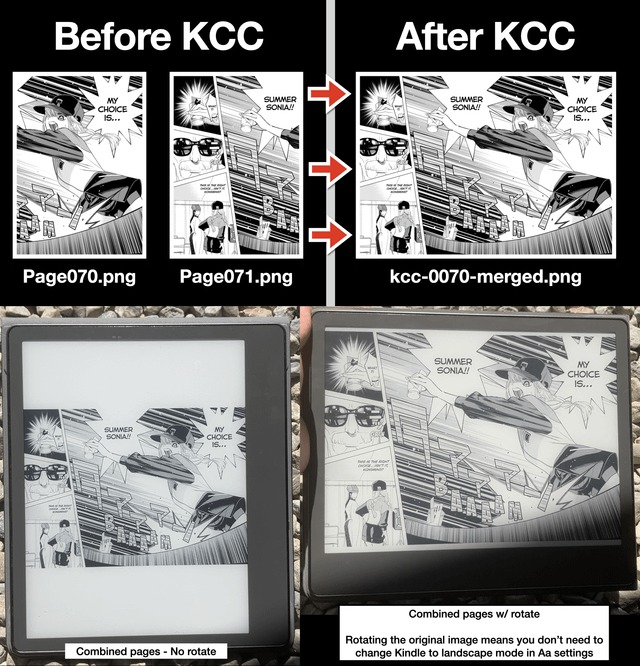
Written instructions matter most when the writer and artist are different people. A line that seems obvious to the writer can leave the artist guessing about who acts, whether the action is visible, or what the dialogue needs to convey.
Direct thumbnails suit a solo creator who discovers the story while sketching. The risk is that exciting visuals hide missing motivation or continuity. A detailed script has the opposite risk: dialogue piles up before anyone asks how much the drawing could carry.
Script and rough pages work together. A rough page exposes a missing reaction that needs a script note, and a script shows you a scene that needs a different visual arrangement.
Make the first rough unit in whichever form your scene needs, then note what's still unclear. The manga script guide covers written handoffs, and the storyboarding guide covers the visual process.
Show the story in pictures before polishing the art
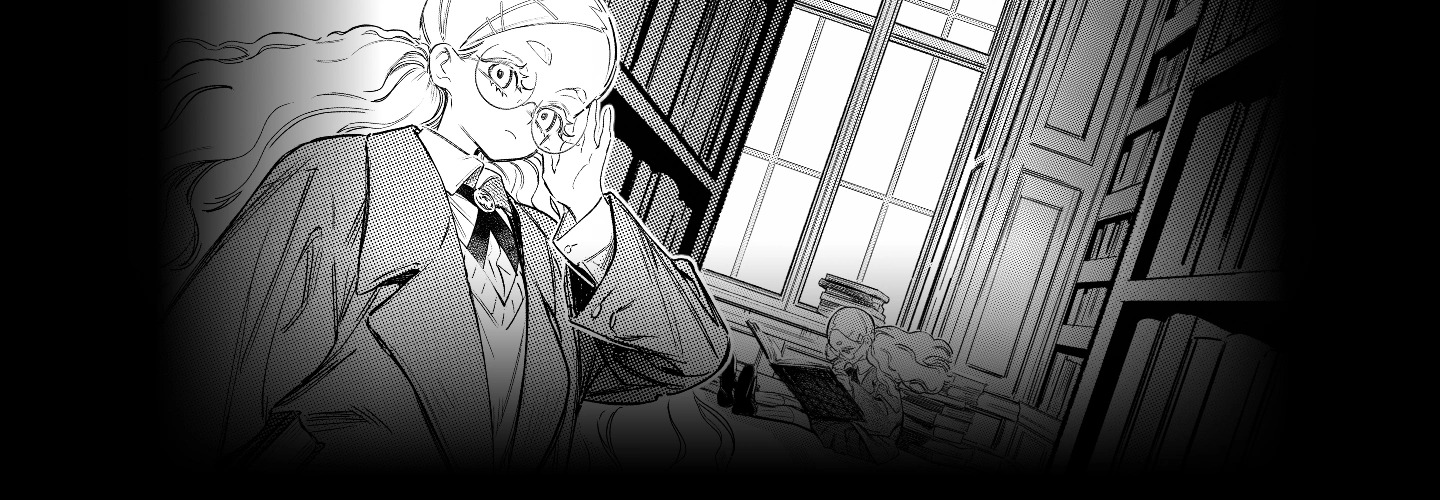
A rough manga sequence needs to show who is present, what happens, how the characters respond, and how the situation changes.
In r/Mangamakers, a creator asking about panels and storyboards wrote, “I have no idea how to tell the story visually basically and I need help to learn that :DDD”. The usual cause is order. A scene can be vivid in your head and still confuse readers when the information reaches the page in the wrong order.
Here's a rough five-panel version of the umbrella scene:
- Panel 1: Establish the situation. Mina stands inside a school doorway, holding the borrowed umbrella. Rain is visible beyond the entrance.
- Panel 2: Reveal the need. Ren waits outside without shelter. Mina can see him.
- Panel 3: Show hesitation. A close-up of Mina's hand tightening around the umbrella shows her private conflict.
- Panel 4: Show the choice. Mina steps toward Ren and holds out the umbrella.
- Panel 5: Show the response. Ren takes it, and the two students finally face each other.
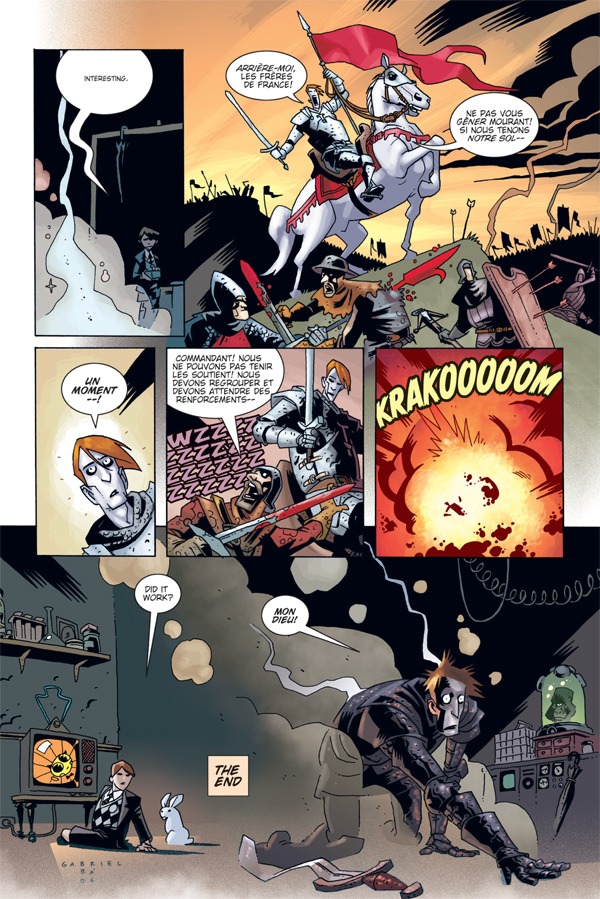
If the pause, the hand, and the approach already show Mina's hesitation, cut the narration that explains her anxiety. Naoko Hara's MediBang tutorial also shows how images can communicate actions and feelings with fewer spoken explanations. Keep dialogue where the scene needs a fact or response the pictures can't convey clearly.
Leave provisional space for speech balloons in the rough plan. A long conversation can cover a key gesture, and balloon placement decides when the reader gets each piece of information.
If the drawings leave it unclear who holds the umbrella or why Mina moves, fix the object, staging, or image order first. A longer explanatory monologue leaves the underlying visual confusion in place.
Turn one story beat into a few ordered rough frames. Beside each frame, write the fact or feeling it must communicate.
For composition and how the reader's eye moves, see manga panel layouts.
Make every chapter change something
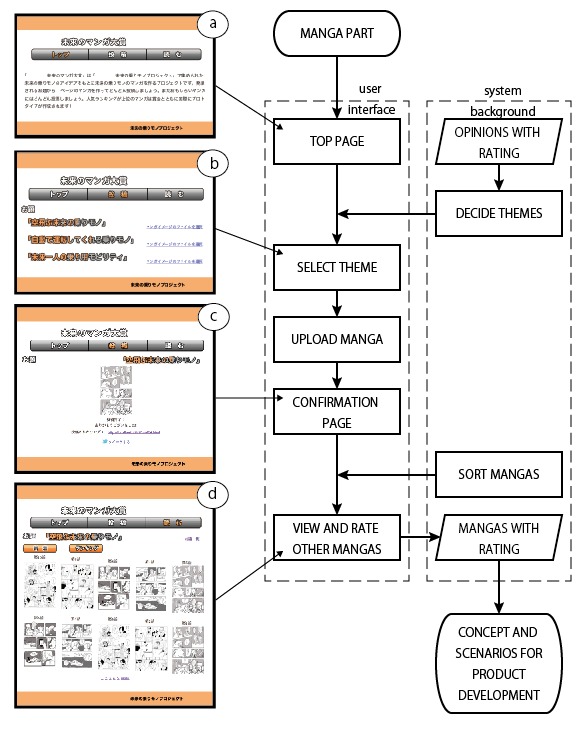
A scene creates one turn in the story. A chapter groups scenes into a single read. An arc carries consequences across chapters. In r/Mangamakers, a creator asked, “How do I pace it chapter by chapter is what i meant sorry (how do I keep it interesting)...”
A quiet chapter can still change things. It opens with Mina and Ren avoiding each other and closes with an offered umbrella and a willingness to speak, which gives their next encounter different stakes without a cliffhanger.
For one planned chapter, state what changed between its opening and closing and which earlier event made the change matter.
Know when to stop planning and test the rough story
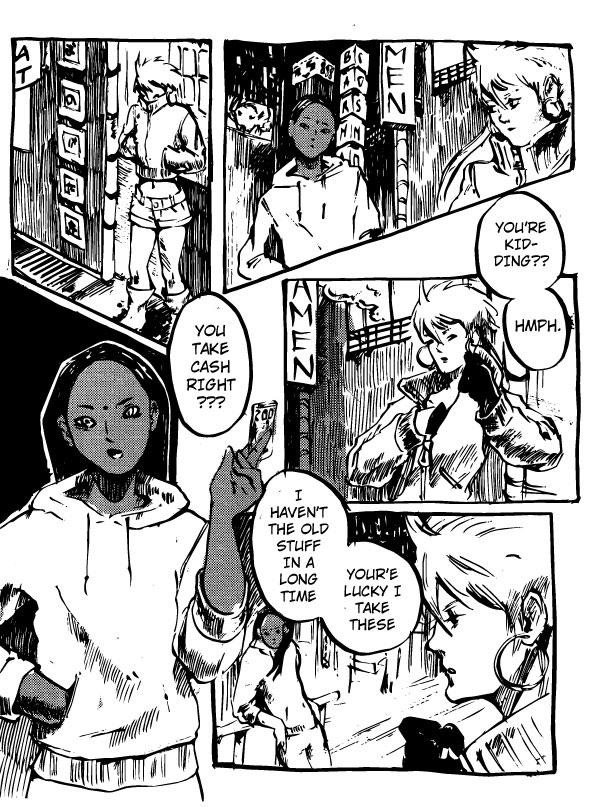
A rough story is ready for feedback when another person can follow its important actions without you explaining the outline first. Their account shows what's missing while the scene is still easy to revise.
In the umbrella sequence, a new reader should be able to say who holds the umbrella, who needs shelter, where the hesitation happens, and how Ren responds to the offer.
The test is simple:
- Show the rough sequence. Give it to someone who hasn't read the outline or heard your explanation of the scene.
- Ask for an account of events. Have the reader describe who acted, what happened, and the order in which they understood it.
- Locate the confusion. If they give the umbrella to the wrong character or miss the acceptance gesture, find the image or transition responsible.
- Revise that point. Change the staging, missing visual cue, dialogue, or sequence that caused the misunderstanding.
Ask whether they enjoyed the story only after they've given their account.
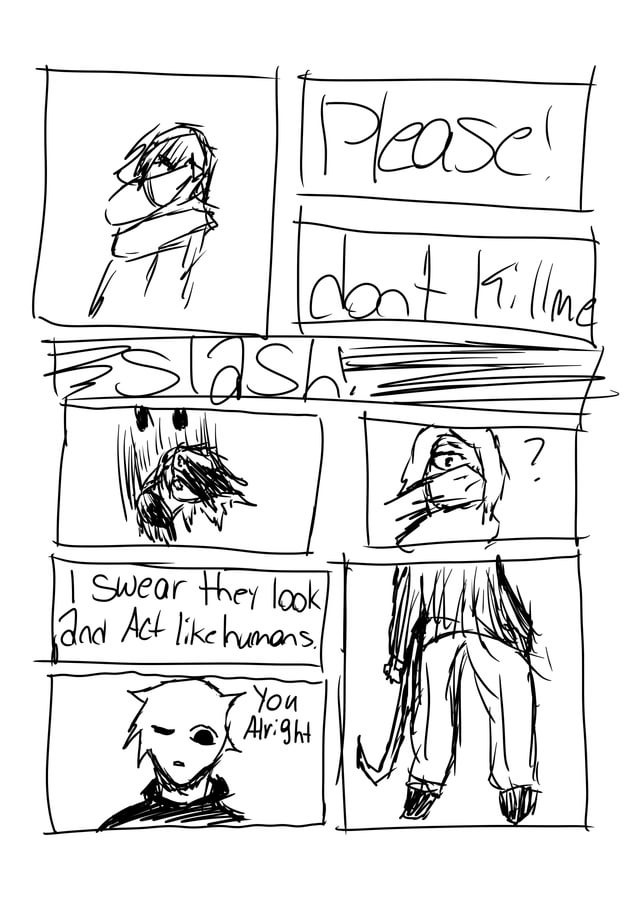
An intended mystery and an unclear action produce different questions. A reader who understands that Mina is returning the umbrella but wonders why the conversation feels uncomfortable has found the mystery. A reader who can't tell which student approached whom has found a staging problem.