Give the character a few features that are easy to recognize and quick to redraw. Record them on a small model sheet and test them in rough panels. Fix the details that drift or slow you down, then start the storyboard. A one-off illustration needs less of this.
A character can look wonderful in a finished portrait and become a stranger three panels later. The hair changes shape, the face grows narrower, or a familiar coat gains details the artist never intended. A manga character needs an appearance that can survive a change of angle, scale, and expression.
Follow one invented character through the decisions below: a messenger who carries documents through a rainy fictional town. You end up with a design you could use in a chapter.
Start with the character's role in the story
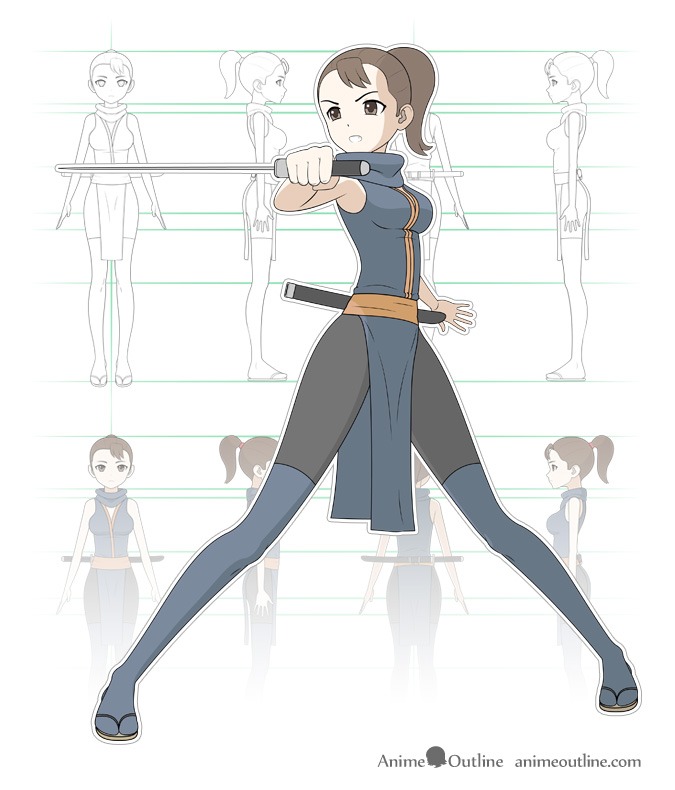
Give the character a clear job in the story before you decide on facial features. Setting, occupation, and the way a person moves through scenes suggest what they wear and carry.
The messenger walks between buildings in frequent rain, keeps papers close, and appears throughout the story. Each fact points to a design choice:
| Story constraint | Design decision | What it does |
|---|---|---|
| Frequent rain | Jacket with a raised collar | Gives the costume a practical feature |
| Documents carried on foot | Small bag close to the torso | Shows the job |
| Regular movement across town | Uncluttered garment outline | Keeps the figure easy to draw in motion |
| Reserved temperament | Upright posture, economical gestures | Shows personality without extra detail |
A ceremonial character in the same town would suit a layered outfit. The messenger needs a lighter outline and clothing made for frequent movement.
Write one sentence covering your character's role, setting, and expected appearances. Underline only the facts that change something visible. For the messenger, the rain and document bag matter; a long childhood biography adds nothing here.
VIZ's manga-creation guidance pairs early character sketches with studies of expressions and body language, before the story needs the drawings.
Gather references for specific design questions
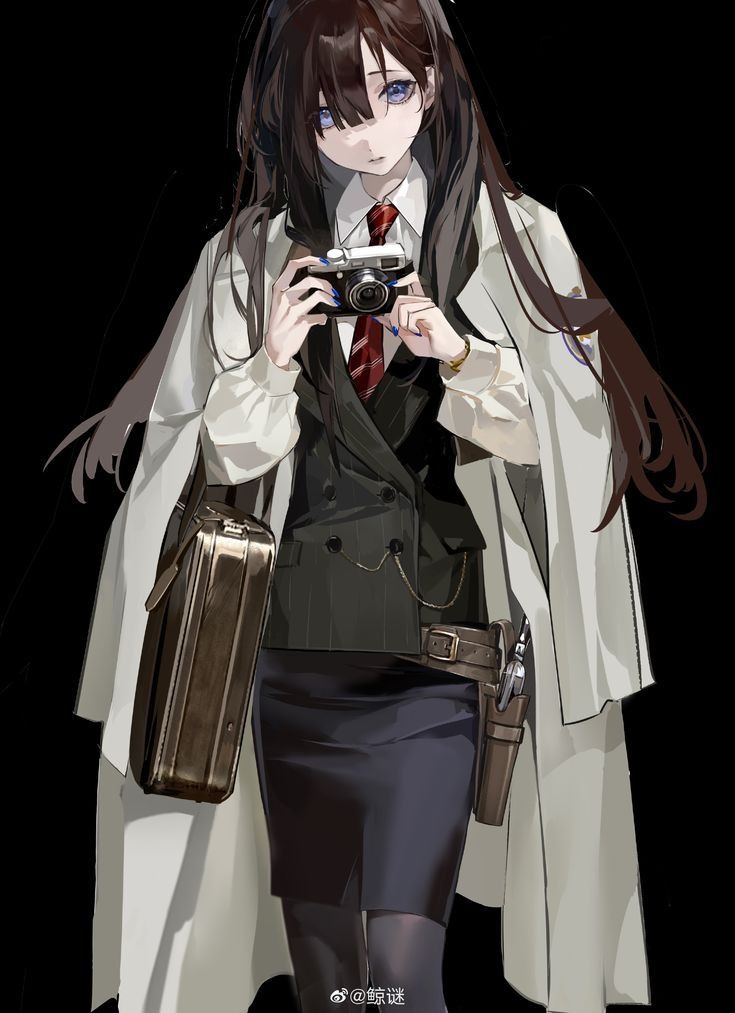
Collect references that each solve a separate drawing problem. A coat shows how a collar sits around the neck, a bag shows how a strap rests against the chest, and a walking pose helps with balance.
One beginner on r/Mangamakers put the problem this way: "I've been struggling to make original characters for my manga and I'd like an opinion on this."
The temptation is to choose one beloved manga protagonist and copy the whole arrangement: hairstyle, face, outfit, and distinctive accessories. Targeted references let you study one construction problem without inheriting that complete appearance.
- Clothing: An ordinary waterproof jacket for the cut, closure, and collar.
- Accessories: A small messenger bag for strap attachment and how it rests at the hip.
- Movement: A basic walking figure for balance and posture.
- Shape: Separate studies of hair volume and wide clothing outlines.
Arrange the board by these questions, then compare your design with the sources. If the character still copies one hero's entire combination of features, change the proportions and shapes.
Choose a silhouette that distinguishes the character
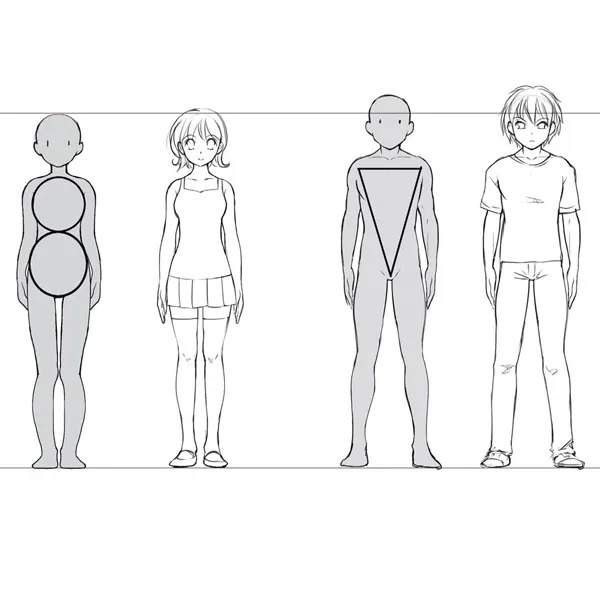
Reduce the character to the shape you'd see if you filled the figure with solid black. Head proportions, hair volume, jacket outline, bag placement, and posture all affect whether that shape reads clearly.
For the messenger, sketch three rough alternatives before refining the face:
- Compact and upright: Short jacket, close bag, controlled posture, little loose material.
- Tall and narrow: Long coat, straighter outline, slim bag.
- Loose and forward-leaning: Wide upper shape, uneven coat edges, low bag.
Pick the compact, upright version. The short coat and close bag suit the messenger's frequent travel, and the raised collar gives the outline a feature that survives a small panel. Keep the other two sketches as alternatives, but don't polish them into competing designs.
A creator showing several similarly dressed characters on r/characterdesign described the problem: "In addition, they are all wearing basically the same outfit, which complicates things further."
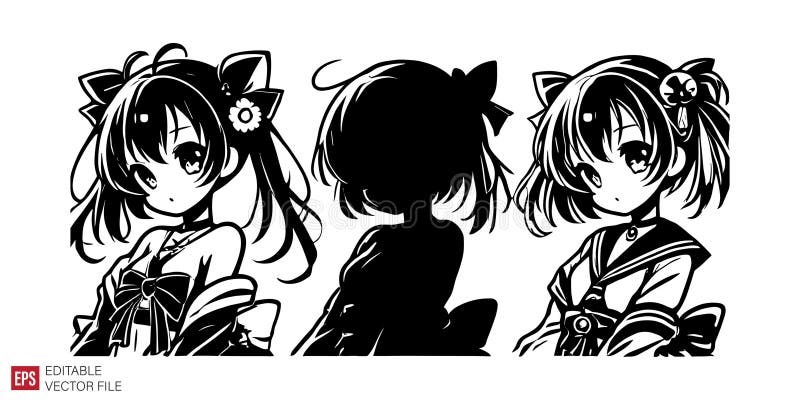
If other messengers wear the same jacket, identity can come from head shape, posture, hair mass, or how each person carries the bag. Intentional similarity can suit a school, military unit, or organization in the story. Readers still need enough difference to tell characters apart in a scene, without an exaggerated hairstyle on every head.
Pick the features you'll redraw every time
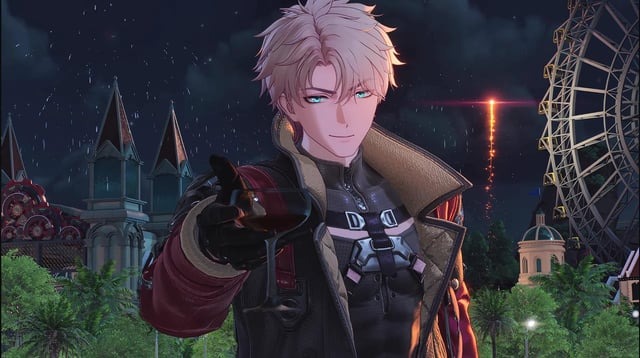
The silhouette sets the outer shape. Next, fix the features that make the messenger the same person in every drawing.
Give the messenger a slightly angular jaw and a broad sweep of hair that rises above one temple and falls toward the cheek. The high jacket collar stays in the outline. The bag hangs from the left shoulder toward the opposite hip. When the viewpoint changes, the strap crosses the image in a different direction, but its position on the character stays the same.
Keep the relationships, allow the expression to move
Head width, jaw shape, eye placement relative to the brow, and the dominant hair mass are the proportions to hold. A grin, an angry brow, or a turned head changes the visible face, but the face still belongs to the same design. Small strands can shift around the larger hair shape, coat folds can move while the collar keeps its outline, and the bag can swing as the character walks. That lets the character act without turning every pose into a new costume.
Mark the fixed facial, hair, garment, and prop features on the chosen sketch and separate them from the flexible details.
Clip Studio Paint's character-design tutorials work through poses, expressions, and multiple reference views. You can make the same decisions on paper or in any drawing app.
Build a small model sheet
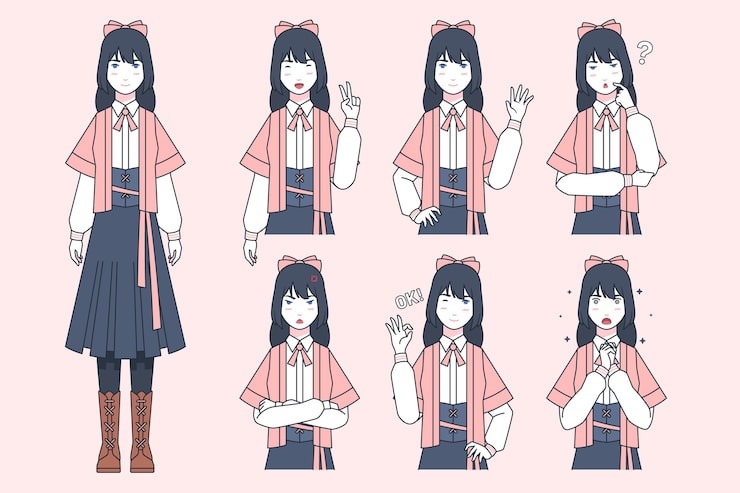
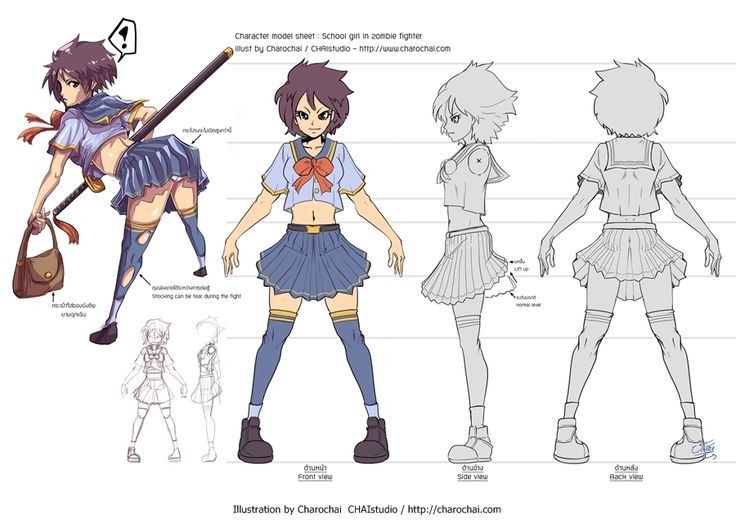
A model sheet is the working reference for features that must stay consistent across pages. Give the messenger a clear main view, a profile, and a three-quarter view, with every fixed feature placed as on the chosen sketch. Add a few expression sketches and short notes on head-to-shoulder proportions where they affect later scenes. A character seen briefly or from one angle needs far fewer views than a lead who appears often, and a complete turnaround is useful only when the story calls for it.
Test the design in manga panels
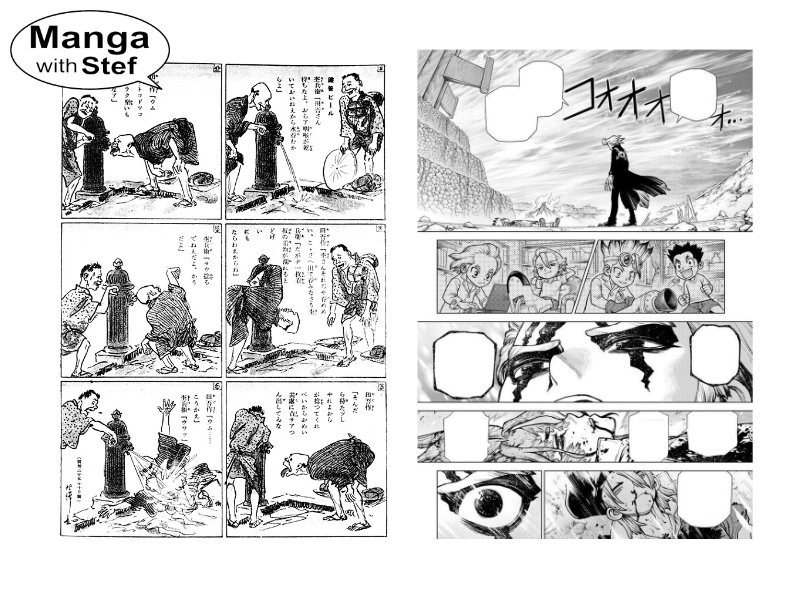
Put the chosen design into rough story panels, where the viewpoint and available drawing space change. A polished standing portrait can hide a missing profile decision. A small panel shows whether the character's key shapes hold together without tiny detail.
Someone drawing their first manga or webtoon panels asked on r/Mangamakers: "How do you guys ensure your character looks consistent across different angles for different panels?"
For the messenger, sketch a short sequence:
- Medium view: Standing with the bag visible, showing the short jacket and overall proportions.
- Small panel: Crossing a street, with the face too small to carry every identifying feature.
- Profile: Turning toward a doorway, showing the jaw and hair sweep from the side.
- Reaction: Hearing unexpected news, with a changed expression and the same key facial features.
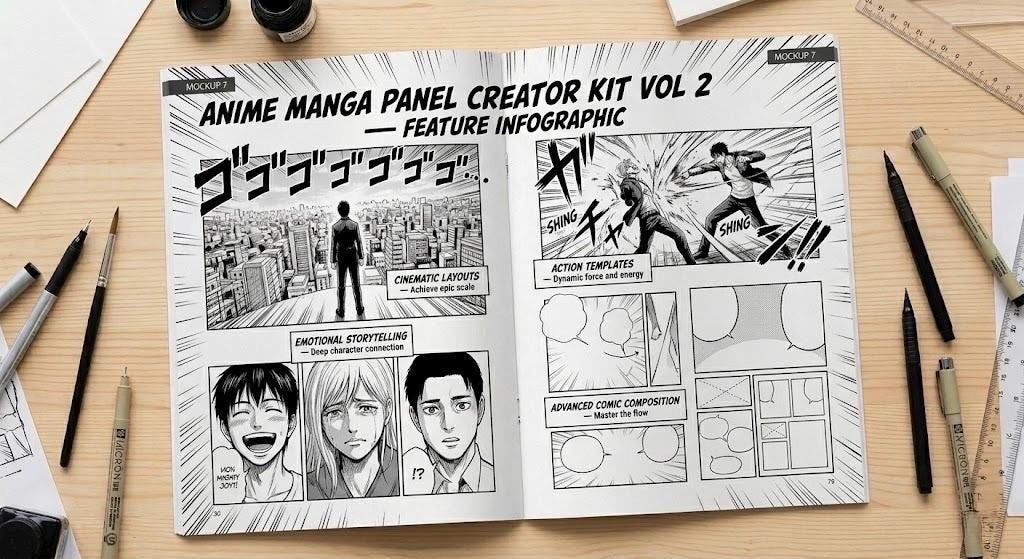
In the test, the medium and small views keep the raised collar and the upright outline. The profile is weaker: the hair sweep is drawn as a thin strip, which loses the full shape from the model sheet.
Compare each rough panel with the model sheet for head proportions, hair shape, and costume placement. For black-and-white manga, also look at shapes and tonal separation in grayscale. A full-color webtoon can skip that step.
Diagnose the feature that keeps going off-model
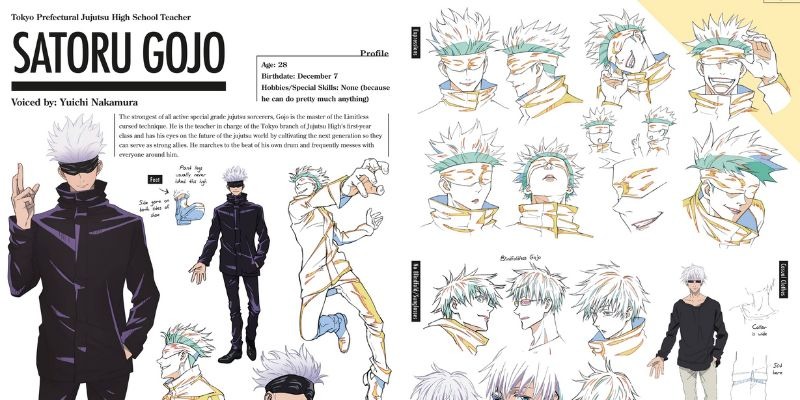
A character can look different between panels because the design is underdefined or because the drawing departs from a clear reference. Find out which one caused the mismatch before you change the character.
| Symptom | What to inspect | Correction |
|---|---|---|
| Hair collapses in profile | Whether the side-view hair mass is on the model sheet | Redraw it from the sheet, or define it there first |
| Face seems too narrow | Jaw and head width across views | Redraw the jaw at the width shown on the sheet |
| Bag appears on the wrong shoulder | Strap position on the character, and the camera angle | Move the strap back to the left shoulder |
| Jacket looks unfamiliar | Collar shape and garment outline against the sheet | Redraw the collar in its main form |
| Expression changes the face entirely | Jaw, brow, and hair against the sheet | Pull the face back to the sheet proportions and keep the expression |
For the messenger's failed profile, the sheet already shows a full side view with the broad lock curving toward the cheek, so the missing volume is a drawing error. Redraw the lock in the profile sketch and leave the turned head and expression alone.
If the sheet had no side-view hair information, start there: define the profile shape and use it to guide the panel. Lighting, foreshortening, or expression can also change a visible contour while the character still looks like the same person.
Isolate the biggest discrepancy in your own sample, then review the corrected feature across the panels you've already drawn.
Decide which details to keep before storyboarding
Keep a detail only if it adds to the character's identity, story role, or the scene. A small decoration that disappears in ordinary panels still costs repeated linework across a chapter.
An artist showing a detailed spider-themed original character on r/characterdesign asked whether the design was too complicated or actually looked good.
Use the messenger's outfit to separate repeating essentials from details that only pay off in a close-up:
| Feature | Story or identity value | Recurring effort | Decision |
|---|---|---|---|
| Raised jacket collar | Defines the outline | Wide, repeatable shape | Keep |
| Small shoulder bag | Shows the messenger's job | Repeats often but worth the effort | Keep |
| Several tiny buckles | Little effect in small panels | Repeated fine detail | Simplify |
| Decorative seam stitching | Little effect on identity | Frequent small marks | Remove from routine panels |
| Elaborate coat trim in a close-up | Enriches a special scene | Occasional detail | Use where visible |
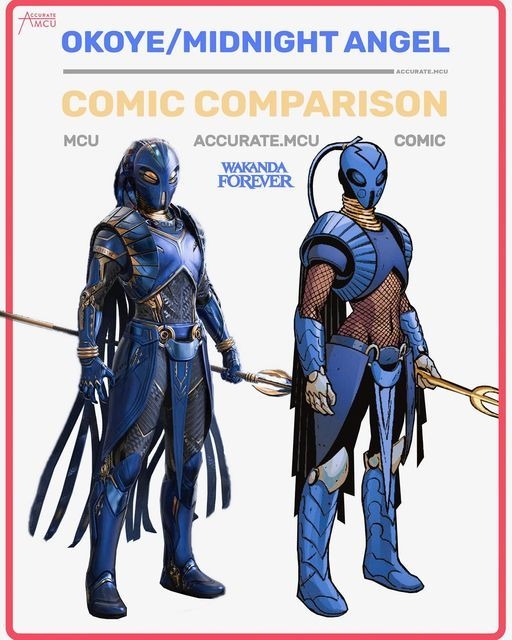
A richly ornamented costume can still suit a ceremonial role or a close-up that gives the details room. Mark each repeating feature to keep, simplify, or omit based on the scenes you plan to draw.